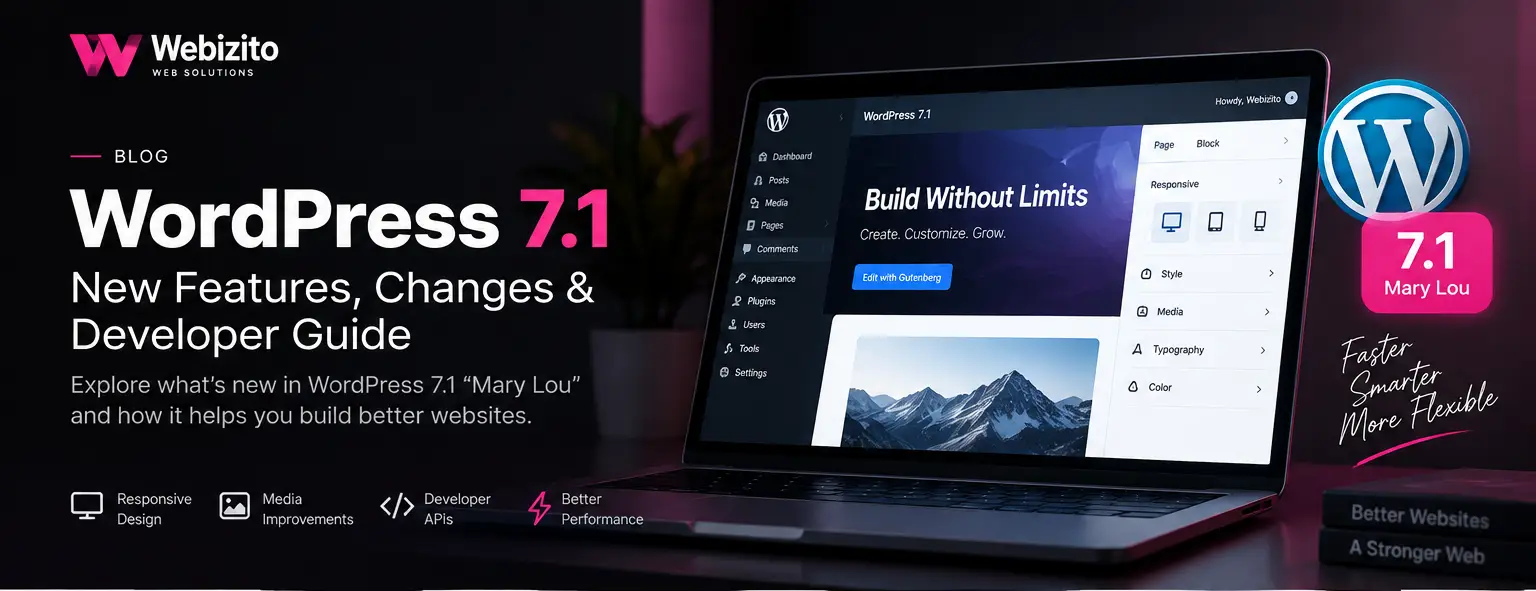
WordPress 7.1, code-named “Mary Lou,” was officially released on August 19, 2026. It is the second major WordPress release of 2026 and includes significant improvements for website owners, designers, theme developers, plugin developers, and contributors.
The release focuses on improving how users design responsive websites, work with media, navigate the editing experience, and collaborate. For developers, WordPress 7.1 expands several important APIs and introduces new tools for building modern WordPress themes, plugins, integrations, and admin experiences.
According to the official WordPress 7.1 Field Guide, the release includes more than 310 Core Trac tickets, including over 100 enhancements and feature requests and more than 180 Core bug fixes.
In this guide, we’ll explore the most important WordPress 7.1 features and explain what they mean for website owners and developers.
Key Features in WordPress 7.1
- Responsive Styling – More control over how supported blocks appear across desktop, tablet, and mobile devices.
- Improved Media Processing – Client-side image processing helps reduce server workload when handling large images.
- Media Library Improvements – Better browsing, upload progress, retry handling, and infinite scrolling.
- SVG Icon API – A standardized API for developers to register and use SVG icons in WordPress.
- Abilities API Improvements – Expanded functionality for integrations, automation, and AI-powered WordPress tools.
- Global Styles Enhancements – More styling flexibility through
theme.json, including responsive and interaction states. - Editor Improvements – Updates to the Block Editor, DataViews, DataForm, and other editing experiences.
- Accessibility Improvements – Better navigation, screen-reader support, tooltips, labels, and interface accessibility.
- Performance Improvements – Improvements to media handling and other Core functionality for a more efficient WordPress experience.
- Developer API Updates – New and improved APIs provide more flexibility for custom themes, plugins, blocks, and integrations.
WordPress 7.1 continues to strengthen WordPress as more than a content management system. With improvements to responsive design, developer APIs, performance, accessibility, and automation capabilities, the release provides a stronger foundation for building modern, scalable, and customized WordPress websites.